Please support the Ministry’s public relations work: We need your consent to be able to measure your user activity on our website using etracker. A pseudonymised evaluation of this data by etracker helps us to improve our website. You can revoke your consent at any time for the future. Once you have made your selection, the consent management screen will appear at the bottom of the page. You can use this to stop or to reactivate the statistical evaluation at any point. You can reactivate tracking by dragging the slider in the opposite direction.
This website sets temporary session cookies. These are strictly necessary and therefore cannot be deselected. Their sole purpose is to enable you to use the website.
The Ministry also presents its work on this website in the form of videos. These are made available by the provider TV1 using JW Player. Please consent to the transmission of your IP address and other technical data to JW Player and allow JW Player to set cookies on your end device if you wish to view videos on our website. We also provide a consent management function for this at the bottom of the page. You can use this to control whether JW Player is enabled or not.
You can find detailed information on your rights and how we protect your privacy in our privacy policy.
Consent to the use of JW Player for video streaming
The Ministry also presents its work on this website in the form of videos. These are made available by the provider TV1 using JW Player. Please consent to the transmission of your IP address and other technical data to JW Player and allow JW Player to set cookies on your end device if you wish to view videos on our website. We also provide a consent management function for this at the bottom of the page. You can use this to control whether JW Player is enabled or not.
Everyone needs electricity and heat – but how to best organise transmission, distribution and storage? Go ahead and learn about the most intelligent designs and solutions!
Energy efficiency is key, both for the current building stock and for everything to be built from now on. Find out more about how the building stock can be made fit for future energy savings!
In tomorrow’s energy world, industries, commerce and agriculture use only a fraction of the energy they use today – with no negative effects on output.
Electromobility and new, alternative fuels are about to fundamentally change the transport sector. Find out more about the characteristics and prospects of these technologies!
In order to achieve an integrated energy system, power, heat and mobility need to be combined in a way that is both intelligent and sustainable. Take a look at relevant approaches in this field!
Are you looking for face-to-face meetings with German companies? Would you like to receive first-hand information? The German energy solutions initiative offers you a number of different possibilities to do so.
Sign up to our newsletter service to receive the latest information about German energy solutions and about opportunities to meet German business partners around the world.
All events
If you are interested in attending an event of the German energy solutions initiative, you will find the dates and locations in our calendar.
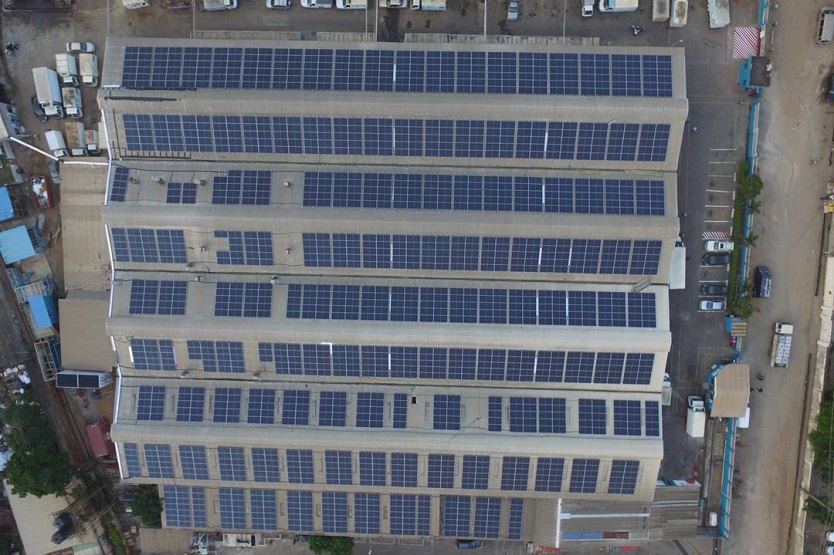
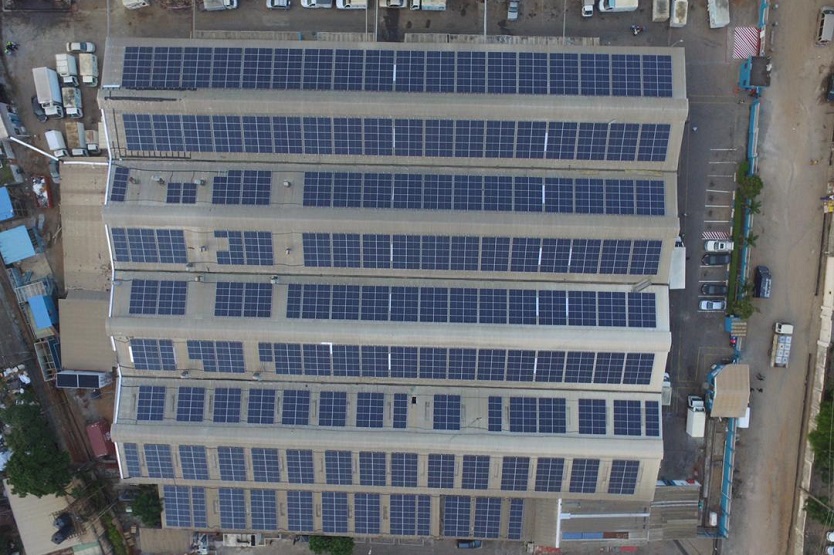
A solar hybrid photovoltaic (PV) system with a capacity of 800 kWp has been installed at UAC Dairies in Lagos, Nigeria.UAC Dairies is the subsidiary of UAC Foods, a company that produces beverages, ice-cream and snacks. With the increase in grid electricity costs by approximately 40% since November 2020, UAC Dairies saw a huge increase in their production costs and was looking for ways to reduce it. Energy costs account for about 40% of their production costs so an increase in this naturally translates into an increase in the price of the products for consumers.
Thesystem provides the ice-cream producing company with clean energy, saving up to 2.000 tonnes of CO2 emissions per year.The solar system will provide 50% of the factory’s daytime power consumption, reducing the use of diesel generators. With the new solar system, UAC is expected to save more than 30% on its current energy costs over a ten-year period.
The PV system consists of an array of solar modules mounted on the factory’s roof that convert energy from the sun into electricity, inverters that change this electricity from a DC current to AC current, and a monitoring system that continuously tracks the output of the system and also enables remote monitoring. The power produced is supplied to the factory’s existing electrical system (grid and diesel gensets), and interconnects via a hybrid controller. The controller enables the prioritization of the power sources based on the cheapest available source per kWh, with solar power in this case as the primary source. The factory is still connected to the national grid, however the electricity produced by the solar system is solely for captive/self-consumption and is not fed back into the grid. During the night or on cloudy days, when not enough energy is produced by solar power, electricity comes from either the national grid or diesel genset.
The project was coordinated and implemented by Daystar Power Group, a German SME providing renewable energy solutions for commercial and industrial clients across Africa. Using its Solar-as-a-Solution model under which the company pays a flat tariff per kilowatt hour with zero upfront costs, Daystar Power designed a tailored solar solution for UAC Foods. For the installation, Daystar mounted 1496 units of 535 Wp PV modules, on the roof of UAC Dairies Ikeja factory. The solar panels are connected to a remote monitoring system, allowing for preventive maintenance. Daystar now operates and manages the power system, guaranteeing 99% system uptime and UAC only need to focus more on running their core business.
Daystar engineering team showing the UAC team how the system works during the inauguration event.
The Project Development Programme (PDP) team of the German Energy Solutions Initiative supported the project development process by providing technical and economic analyses and played a key role in initiating business. The PDP team was also involved in bringing together suitable partners for this project.
This was done by collecting data to understand UAC’s current energy costs, pattern of operation and energy sustainability goals. With these PDP was able to advise UAC on the cost savings opportunity the solar system could provide. Throughout the process, PDP addressed any technical, financial and legal questions. PDP outlined the potential of saving considerable costs by exploring different investment models that were well-suited to their financial demands. With a corresponding mandate by UAC was connected to German SMEs that fit their criteria. B2B meetings to negotiate with experienced project developers where set up.
Nigeria offers large prospects for climate friendly energy solutions as they are very cost competitive for running commercial and industrial operations. PDP plays an important role in the energy transition in Nigeria by improving the technical know-how and advising on the access to finance in the region.
System Data
Installed capacity:
800 kWp
Location:
Lagos, Nigeria
Client:
UAC Dairies
In operation since
August 2021
German business partner:
Daystar Power Group
Type:
Roof-top PV
Yield:
Up to 1,251 kWh per year
Saved CO2 emissions:
Up to 2000 tonnes per year
Number of solar panels:
1,496 of 535 Wp PV Modules
Number of inverters:
8
Project Video
07/12/2021Video
PEP-Referenzprojekt: Solar-Hybrid-System für UAC Dairies


![Logo [EN]German Energy Solutions](/SiteGlobals/GES/StyleBundles/Bilder/sublogo_en.svg?__blob=normal&v=1 "To homepage")